


Much of our world now lives online from accessing crucial information and public services to staying connected with loved ones and participating in work, education, or civic life. The internet increasingly feels essential for modern living. But have you ever stopped to ask: is it truly safe for everyone, everywhere?
For many around the globe seniors navigating unfamiliar technology, individuals with disabilities facing accessibility hurdles, low-income households relying on shared or outdated devices, or communities in regions with limited infrastructure the online world can often feel more like a minefield than a gateway.
Mainstream online safety advice (“just use a strong password!”) doesn’t always reflect the lived realities of these diverse groups. The threats they face are not only technical but deeply tied to broader issues of access, support, and context.
The Global Safety Gap
There’s a growing global gap between efforts to promote digital inclusion — getting everyone online — and the equally critical need to ensure digital safety, particularly for those who are most at risk. Many cybersecurity frameworks were not designed with the realities of vulnerable or underserved populations in mind.
From targeted scams and misinformation to exploitation and privacy violations, the most vulnerable are often the most exposed. Yet, we still lack a comprehensive understanding of the full range of challenges these communities face when trying to safely engage online.
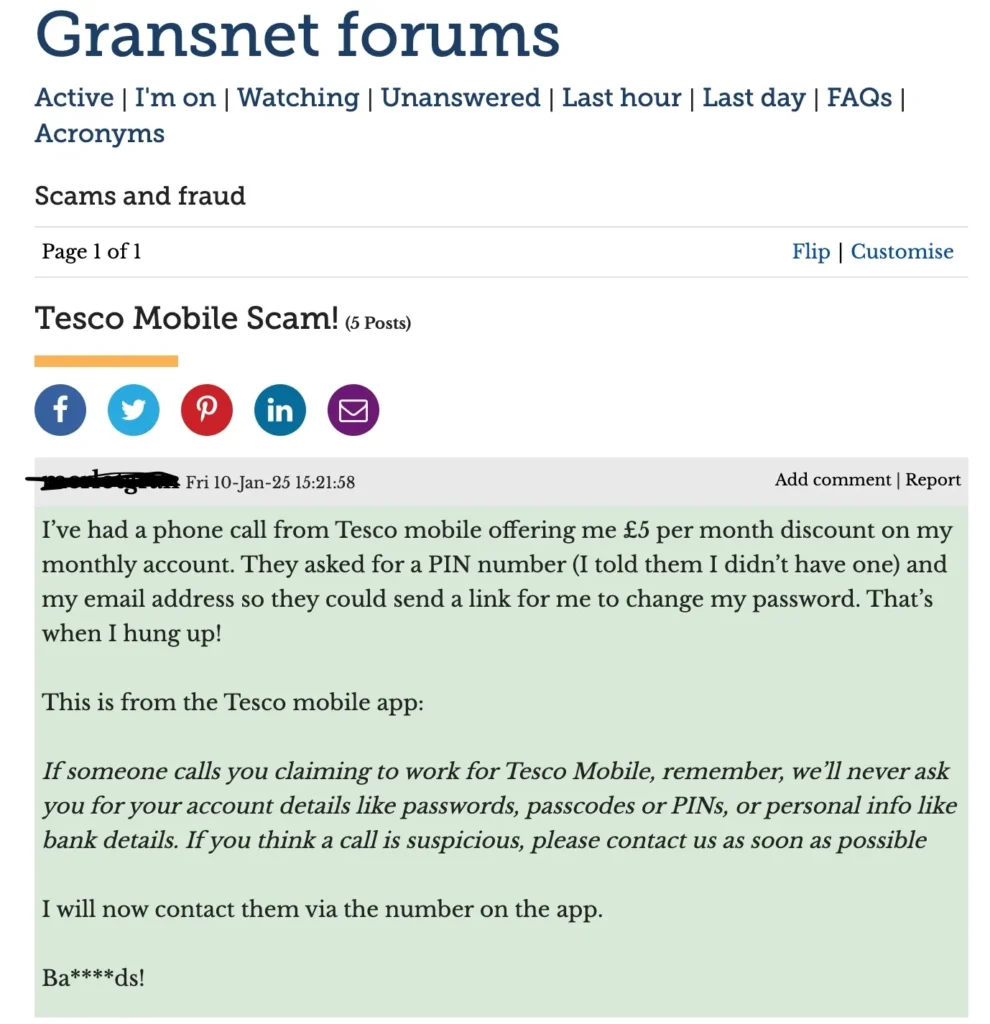
Here’s a snapshot from a public Gransnet forum, where an older user reports being targeted by a phone scam impersonating Tesco Mobile. The scammer tried to obtain a PIN and email address under the guise of offering a small discount. The user wisely hung up but the post highlights just how everyday, convincing, and invasive these attacks can feel.
These aren’t isolated incidents they’re common across regions and platforms, particularly affecting those who may already struggle with digital literacy or confidence.
My Research: Understanding the Global Challenges.
The central aim of this work is to identify and understand the specific cybersecurity challenges preventing safe digital participation for vulnerable and underserved communities around the world. By focusing on their experiences, this research seeks to reframe cybersecurity not just as a technical issue, but as a matter of equity, inclusion, and sustainable development.
How I’m Approaching It
As an independent researcher, I’m drawing from a wide range of sources to build a nuanced, global picture:
- Academic studies on cybersecurity, inclusion, and digital adoption across different regions and populations.
- Reports from global organizations including the UN, NCSC, NGOs, development agencies, and national governments.
- Publicly available online insights from community forums, consultations, and digital storytelling spaces (with full respect for ethical research principles, privacy, and cultural sensitivity).
This is an ongoing process, but even early findings are clear: there’s a major disconnect between generalised cybersecurity advice and the diverse, real-world conditions of those most at risk.
Why It Matters: Connecting to Global Goals
This research speaks directly to key global challenges and opportunities.
- Community: It centres the experiences and needs of often-overlooked communities around the world.
- Innovation: It highlights where new, culturally relevant, accessible, and practical solutions are urgently needed whether in technology, policy, education, or community design.
- Sustainability: It contributes to long-lasting safety measures that support the Sustainable Development Goals ensuring digital progress benefits everyone, not just the privileged few.
The hope is that these insights can help shape better international policies, more inclusive technologies, and smarter interventions from aid organizations building a safer digital ecosystem for all.
Ensuring that vulnerable populations are not just online, but safe online, is vital to building a fairer, more inclusive digital society. My research is a step toward understanding and ultimately closing the gap between access and safety.